Seeing “Salary: DOE” on a job posting can be frustrating.
You’re excited about the role, but without a clear number, it’s hard to know whether the opportunity is worth pursuing or if your expectations will even come close.
Many candidates skip these listings altogether or waste time applying without knowing what they might actually earn.
This guide explains exactly what DOE means in a job listing, why employers use it, how it affects your application and negotiation strategy, and how to decide whether a DOE role is worth your time.
Understanding this common phrase can save you time and help you approach salary conversations with confidence.
What Does DOE Mean in a Job Listing?
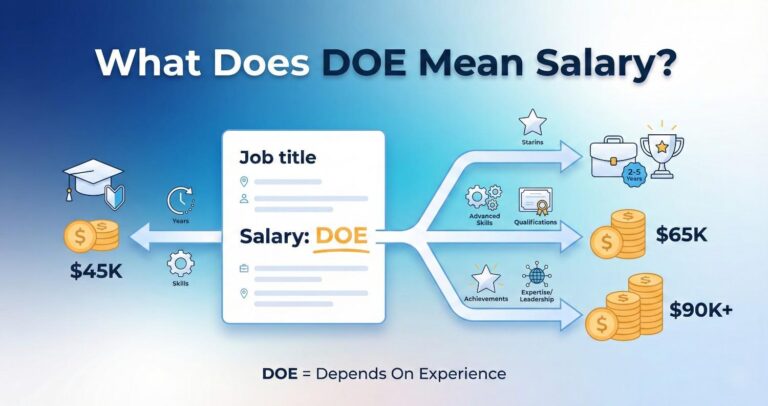
DOE stands for “Depends On Experience.” When a company lists a salary as DOE, they are not publishing a fixed figure.
Instead, they will tailor the offer based on your specific background – including years of relevant experience, technical skills, education, certifications, and demonstrated achievements.
It signals flexibility. The role might suit candidates from entry-level to senior, and the final compensation will reflect what you bring to the table rather than a one-size-fits-all number.
You’ll typically discover the actual range during the interview process once the employer has assessed your fit.
Why Employers Use DOE in Job Postings
Companies choose DOE for several practical reasons. It gives them room to attract a wider pool of candidates without limiting themselves to people who match a narrow salary band.
It also protects their negotiating position and keeps internal salary bands private from competitors or current employees.
In fields with wide variation in candidate quality – such as tech, marketing, sales, or skilled trades – DOE allows employers to pay top talent more while offering more modest packages to those still building experience.
It’s particularly common in smaller companies or startups that don’t have rigid pay bands.
DOE in Practice: Real-World Examples
A Project Manager role listed as “Salary: DOE” might offer £45,000 to a candidate with three years of experience, £55,000–£60,000 to someone with seven years and strong results, and £70,000+ to a proven expert who can hit the ground running.
The same principle applies across industries: the more value you can demonstrate, the stronger the offer is likely to be.
The Overlooked Challenge: Transparency and Negotiation
One aspect many job seekers miss is that DOE often indicates the company wants to control the narrative around pay. While it can benefit strong candidates, it can also hide broad salary ranges or lower starting points than expected.
In competitive markets, some employers use DOE to test how proactively candidates research and negotiate.
Future trends show increasing pressure for pay transparency laws in parts of the UK and Europe, which may reduce the use of vague DOE postings over time.
Practical Considerations and Common Mistakes
Many applicants apply to DOE roles without doing market research, then feel disappointed when the offer arrives.
A frequent mistake is assuming DOE always means “high pay” or, conversely, avoiding these listings entirely.
Others fail to prepare a clear value proposition and simply ask “What’s the salary?” too early, which can weaken their position.
Risks include wasting time on roles that ultimately pay below your minimum requirements or accepting an offer without fully understanding the total compensation package.
Beginners often overlook non-salary elements like bonuses, pension contributions, flexible working, or professional development budgets that can significantly change the overall value.
Always research comparable roles on sites like Glassdoor, Reed, or Totaljobs, and prepare questions to uncover the budgeted range early in the process.
How to Handle DOE Listings Effectively
When you see a DOE posting that interests you, apply if the role aligns with your skills and career goals.
During screening calls or early interviews, politely ask: “Could you share the budgeted salary range for this position?” This shows confidence and helps you decide whether to continue.
Highlight your relevant experience clearly in applications and interviews to justify the higher end of any range.
Is a DOE Salary Role Right for You?
DOE can be advantageous if you have strong, demonstrable experience and negotiation skills – you may end up with a better offer than a fixed-salary role.
It suits candidates who are confident in their value and comfortable discussing compensation openly.
However, if you prefer transparency, need a minimum salary for your lifestyle, or are early in your career with less leverage, DOE roles can feel uncertain and time-consuming.
Consider your personal situation: Do you have competing offers or strong market demand for your skills? Are you willing to walk away if the final number doesn’t meet your needs?
For many professionals, especially those with specialised expertise, DOE opportunities lead to better outcomes than rigidly advertised lower salaries.
Weigh the role’s potential, company culture, and growth opportunities alongside the compensation uncertainty.
FAQs
Conclusion
DOE – “Depends On Experience” – is a common way employers signal flexibility in compensation rather than committing to a single number upfront.
While it reduces transparency, it can work in your favour when you’ve done your research and can clearly articulate your value.
Approach these listings strategically: research market rates, prepare your achievements, and engage in open salary discussions during the process.
Understanding DOE helps you avoid surprises, negotiate more effectively, and focus your energy on opportunities that truly match your expectations and career goals.
