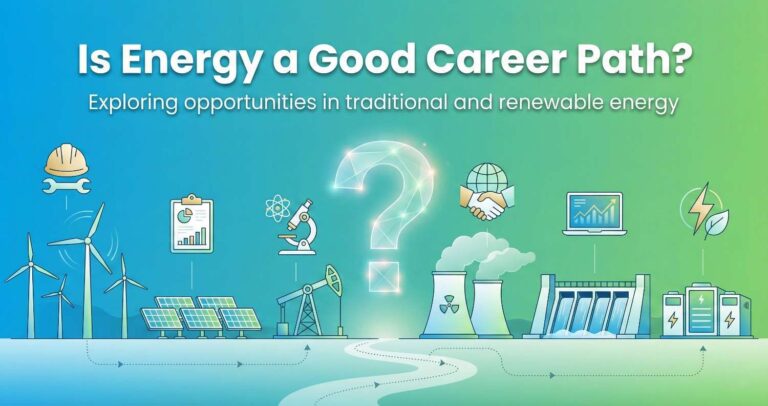
Energy is one of those industries where the career conversation has shifted dramatically in a short period of time.
Ten years ago, “energy career” largely meant oil and gas. Today it spans petroleum engineering, solar installation, wind turbine maintenance, grid modernization, battery storage, and energy consulting – sectors with very different growth trajectories, compensation structures, and long-term outlooks.
That range is what makes energy worth examining carefully rather than treating as a single career category.
Here’s what the sector actually offers, broken down by role and sub-sector, with an honest look at where the opportunities are strongest and where the risks are real.
What Energy Careers Actually Cover
Energy careers involve producing, distributing, managing, and increasingly decarbonizing the power systems that run modern economies.
The sector spans traditional fossil fuels – oil, gas, and coal – through to nuclear, hydroelectric, solar, wind, and emerging technologies like green hydrogen and grid-scale battery storage.
Beyond the generation side, energy careers include grid infrastructure, energy efficiency consulting, regulatory compliance, environmental engineering, and the rapidly expanding field of energy data analytics.
The sector is broader than most people realize when they’re evaluating it as a career path – and that breadth creates more entry points than the traditional “you need an engineering degree” framing suggests.
Common Roles and Salary Ranges
| Role | Average US Salary | Entry Path |
|---|---|---|
| Solar Installer | $45,000 – $65,000 | Technical certification |
| Wind Turbine Technician | $55,000 – $75,000 | Technical certification or associate degree |
| Electrical Engineer | $80,000 – $110,000 | Electrical engineering degree |
| Energy Analyst | $70,000 – $100,000 | Degree in energy, economics, or data |
| Energy Manager | $90,000 – $120,000 | Degree + experience or CEM certification |
| Petroleum Engineer | $120,000 – $160,000+ | Petroleum or chemical engineering degree |
The salary ceiling in energy is genuinely high for engineering roles, but the floor is also accessible – solar installation and wind turbine technician roles offer solid pay without requiring a four-year degree, making energy one of the more democratically accessible high-wage sectors in the current economy.
Petroleum Engineering
Petroleum engineering remains one of the highest-paid engineering disciplines at entry level, with starting salaries regularly exceeding $90,000 and experienced engineers earning $120,000–$160,000+.
The work involves designing systems to extract oil and gas from subsurface reservoirs – combining geology, fluid mechanics, and mechanical engineering in technically demanding field environments.
The risk profile is equally significant. Oil price cycles directly affect hiring – the sector shed tens of thousands of jobs during the 2015–2016 price crash and again in 2020.
Petroleum engineers who build transferable skills in reservoir simulation, subsurface data analysis, or production optimization tend to navigate downturns better than narrow specialists.
The long-term question of fossil fuel demand reduction also creates genuine career horizon uncertainty for people entering the field today, which is worth factoring into training investment decisions.
Renewable Energy Technician
Wind turbine technicians and solar installers are among the fastest-growing occupations in the US labor market.
The BLS projects wind turbine technician employment to grow substantially faster than average over the next decade, driven by the continued expansion of wind farm capacity across the country and internationally.
Entry is accessible through technical certification programs and manufacturer training – most don’t require a four-year degree.
The physical demands are real: wind turbine work involves climbing towers up to 300 feet and working in exposed conditions. Solar installation is less extreme but still physically active outdoor work.
For people who want strong wage growth without a degree and are comfortable with physical technical work, these roles currently represent one of the better risk-reward profiles in the energy sector.
Electrical Engineer
Electrical engineers working in energy focus on power systems design, grid infrastructure, transmission and distribution systems, and increasingly, the integration of renewable generation into existing grid networks.
The energy transition is creating significant demand for electrical engineers; specifically, connecting intermittent renewable sources to reliable grid systems is a complex engineering problem that requires substantial human expertise.
Electrical engineering as a discipline also transfers well across sectors – an electrical engineer who starts in energy can move into manufacturing, technology, or utilities without retraining from scratch.
That transferability provides a career flexibility buffer that more narrowly specialized energy roles don’t offer.
Energy Manager and Analyst
Energy managers and analysts sit at the intersection of technical knowledge and business strategy.
Energy managers work with commercial and industrial organizations to reduce energy consumption, improve efficiency, and manage energy procurement – a function that’s grown in importance as energy costs and sustainability commitments have both increased.
The Certified Energy Manager (CEM) credential is the standard professional qualification for this role and is achievable without an engineering degree.
Energy analysts focus more on market data, pricing trends, policy impacts, and portfolio analysis – roles that exist at utilities, energy trading firms, government agencies, and consulting companies.
The growing volume of energy data produced by smart grids, IoT sensors, and renewable generation monitoring has created significant demand for analysts who can work with large datasets and translate findings into operational decisions.
Renewable vs Oil and Gas – The Honest Comparison
Oil and gas still offer higher compensation at the engineering level than most renewable energy roles – a petroleum engineer typically earns more than a wind energy engineer at comparable experience levels.
The tradeoff is market cycle exposure and long-term demand uncertainty. Most major oil companies have announced energy transition strategies that involve reducing fossil fuel production over time, which creates genuine career horizon questions for people building long-term careers in oil and gas extraction specifically.
Renewable energy offers lower peak compensation but a stronger demand trajectory and more predictable long-term growth.
Government policy support across most major economies, falling technology costs, and corporate sustainability commitments are all structural tailwinds that are unlikely to reverse.
The sector also tends to have more accessible entry paths – certification-based roles exist alongside engineering positions in a way that the oil and gas sector’s offshore and field operations don’t typically support.
For someone entering the energy sector now with a 20–30-year career horizon, the risk-adjusted case for renewable energy is stronger than it was a decade ago – not because oil and gas are disappearing, but because the growth is clearly concentrated elsewhere.
The Skills Gap: Creating Real Opportunity
One factor that doesn’t get enough attention in energy career discussions is the scale of the skills gap the energy transition is creating.
The International Energy Agency and multiple national workforce reports have identified that the renewable energy buildout requires far more trained workers – installers, engineers, grid operators, project managers – than current training pipelines are producing.
This gap creates genuine hiring leverage for qualified candidates in a way that more saturated fields don’t.
Wind and solar project developers are competing for experienced technicians. Utilities are struggling to find electrical engineers with grid modernization expertise.
Energy storage companies are hiring data engineers and electrochemical specialists in tight markets.
Entering the energy sector with relevant credentials right now puts candidates in a stronger negotiating position than the baseline salary figures suggest.
Is an Energy Career Right for You?
Energy careers tend to suit people who are comfortable with technical subjects, interested in infrastructure and systems thinking, and willing to work in environments that aren’t always office-based.
The sector rewards engineering credentials and technical certifications, and has multiple entry points for people who don’t want to spend four years in a university program – particularly in the renewable installation and technician tier.
It’s a harder fit for people who need fully remote, location-flexible work from the start – most energy roles are tied to specific infrastructure, plant locations, or field sites. The higher-paying roles also tend to require technical education rather than being accessible through general business or humanities backgrounds.
If those constraints don’t apply to you, energy is one of the stronger sectors to be entering in the current decade from a long-term demand and compensation perspective.
Frequently Asked Questions
Conclusion
Energy is one of the more strategically interesting sectors to be entering right now – not because it’s without risk, but because the scale of the transition underway is creating genuine hiring demand across multiple skill levels simultaneously.
Engineering roles, technical trades, data analysis, and project management are all in demand in ways that don’t typically converge in a single industry at the same time.
The key decision is which part of the sector to enter and with what credentials. Renewable energy offers the strongest long-term demand trajectory. Oil and gas offer higher near-term compensation with more career horizon uncertainty.
Both reward technical preparation more than most fields. For anyone comfortable with STEM subjects and willing to invest in relevant credentials, energy provides a combination of income potential, job security, and genuine long-term relevance that’s harder to find in more saturated fields.
