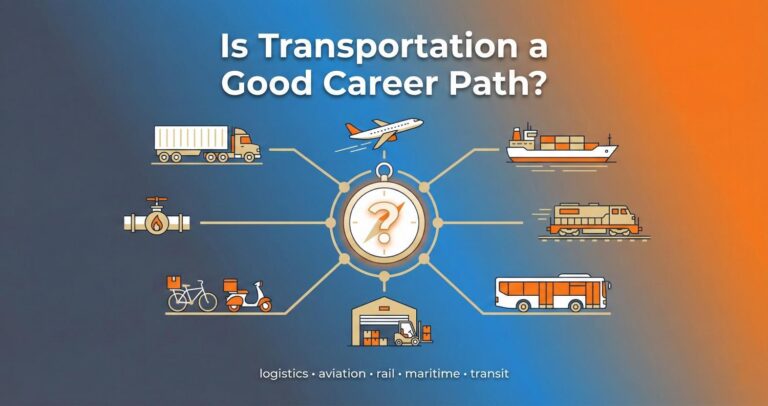
Transportation is one of those industries that rarely makes headlines but never slows down.
Goods still need to move, planes still need to fly, and supply chains still need people who know what they’re doing – degree or not.
So if you’re weighing transportation as a career, here’s the honest breakdown: what it pays, what it demands, and whether it’s actually worth your time.
What Counts as a Transportation Career?
Transportation careers cover any role involved in moving people, goods, or materials from one place to another.
That includes trucking, aviation, rail, maritime shipping, public transit, and the logistics and supply chain roles that keep it all running behind the scenes.
It’s a broader field than most people realize – and that range is part of what makes it worth considering.
Top Transportation Careers and What They Pay
| Role | Average Salary (US) | Degree Required? |
|---|---|---|
| Commercial Truck Driver | $50,000 – $90,000+ | No (CDL required) |
| Logistics Manager | $80,000 – $120,000 | Often yes or equivalent experience |
| Railroad Worker | $60,000 – $100,000 | No (technical training) |
| Air Traffic Controller | $100,000 – $170,000 | Specialized federal training |
| Airline Pilot | $120,000 – $300,000+ | Flight school + licensing |
The range is wide, but the pattern is consistent: even entry-level transportation roles pay reasonably well, and the ceiling is high for those who specialize or move into management.
Commercial Truck Driver
Trucking remains one of the most accessible high-paying trades in the US. You need a Commercial Driver’s License (CDL), which typically takes 3–6 months to obtain – not four years and a student loan.
Experienced long-haul drivers regularly earn $70,000–$90,000, and owner-operators who run their own rigs can earn significantly more.
The tradeoff is real, though: long stretches away from home, irregular hours, and physical fatigue are part of the job.
It suits people who don’t mind solitude and want high income without a degree – but it’s a poor fit for anyone who wants consistent evenings at home.
Logistics Manager
If you’d rather coordinate the movement of goods than drive them yourself, logistics management is where the desk meets the supply chain.
Logistics managers oversee shipping schedules, vendor relationships, inventory flow, and cost optimization – it’s a role that rewards systems thinking and attention to detail.
Most employers want a degree or equivalent experience, but many logistics managers started on the warehouse floor and worked their way up.
The earning range of $80,000–$120,000 indicates that this is genuinely a mid-to-senior-level role with real operational weight.
Airline Pilot
The earning potential here is exceptional – senior captains at major airlines can clear $300,000 – but the path is long, and the licensing requirements are strict.
Flight school, instrument ratings, accumulating flight hours, and passing medical exams are all part of the journey before you ever sit in the left seat on a commercial aircraft.
For those willing to commit to the process, it’s one of the highest-paid careers accessible without a traditional four-year degree. For those who want results in 12 months, it’s not the right move.
Air Traffic Controller
High stress, high pay, and a very specific hiring pipeline. In the US, most controllers are hired through the FAA Academy and go through rigorous training before handling live traffic.
The role pays $100,000–$170,000 and comes with strong federal benefits – but the mental demands are significant and mandatory retirement ages apply.
Railroad Worker
Rail is often overlooked but consistently well-compensated. Locomotive engineers, conductors, and signal technicians typically earn $60,000–$100,000, often with strong union protection and benefits.
The work is shift-based and physically demanding, but the job security in established rail networks is notable.
The Real Pros and Cons
Transportation careers tend to share a few common strengths: recession resistance (supply chains don’t pause during downturns), multiple entry points that don’t require expensive degrees, and genuine room to advance from operator to supervisor to management over time.
The consistent downsides are equally real. Shift work, physical strain, irregular schedules, and, in some roles, extended time away from family are not occasional inconveniences – they’re structural features of the work.
Anyone evaluating transportation seriously needs to weigh those against the income.
What About Automation?
It’s a fair concern. Self-driving technology and warehouse automation are genuinely changing parts of the industry. But the timeline for widespread displacement of human operators – particularly in complex, variable environments like long-haul trucking on public roads or live air traffic control – remains much longer than headlines suggest.
The roles most insulated from automation risk are those requiring judgment, adaptability, and management – which are also the roles with the highest earning potential.
Entering transportation now and building toward logistics management or aviation still makes strategic sense.
Is Transportation the Right Career Path for You?
Transportation tends to work well for people who want solid income without a four-year degree, don’t mind non-traditional hours, and prefer practical work over office environments.
It’s a strong fit for those who value job stability over flexibility and who are willing to invest in trade certifications rather than academic credentials.
It’s a harder sell if you want predictable 9-to-5 hours, location flexibility, or a career you can build entirely remotely. Those priorities point elsewhere.
The industry is large enough that your specific answer depends heavily on which transportation role you’re considering. A logistics coordinator working remotely for a freight company has a very different day than a long-haul trucker – both are transportation careers, but the lifestyle comparison isn’t even close.
Pick the role first, then evaluate the path. That’s the right order.
