Receiving your payslip or considering a job offer often sparks the same question: is this actually a good salary in the UK?
With rising living costs, regional differences, and personal circumstances, there’s no single magic number. What feels comfortable in Newcastle might leave you stretched thin in London.
This article breaks down realistic salary benchmarks, explores what “good” really means in practice, and helps you evaluate your own situation.
Whether you’re early in your career, mid-level, or aiming higher, understanding these nuances can guide better career and location decisions.
Current UK Salary Landscape
According to the latest ONS data, the median full-time salary in the UK sits around £39,000 annually. The overall median (including part-time) is closer to £33,000.
Average figures tend to be pulled higher by top earners, making the median a better representation of what most people actually earn.
These numbers have been rising with wage growth around 4%, but inflation and housing costs mean the real purchasing power varies significantly by lifestyle and postcode.
What Counts as a Good Salary in the UK?
A good salary typically allows you to cover essentials comfortably, save for the future, enjoy some leisure, and handle unexpected costs without constant stress.
In most regions outside London, £40,000+ is widely viewed as the threshold where life starts feeling manageable for a single person or small household.
At £50,000+, you gain more breathing room for savings, holidays, and homeownership in many areas.
| Salary Range | Lifestyle Description (2026) |
|---|---|
| £25,000–£35,000 | Entry-level to early career; covers basics but limited savings, especially in cities |
| £35,000–£45,000 | Solid middle-income; comfortable in most regions with careful budgeting |
| £45,000–£60,000 | Above average; good lifestyle, decent savings potential, easier homeownership outside London |
| £60,000–£80,000 | Strong financial security; supports family, investments, and flexibility |
| £80,000+ | High income; significant discretionary spending and wealth-building capacity |
How Location Changes Everything
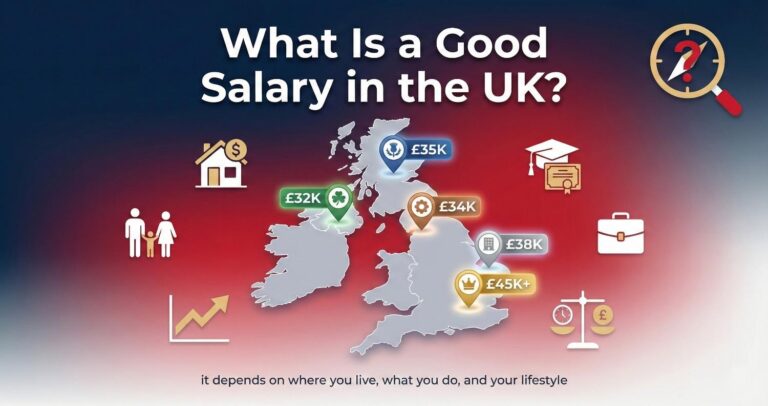
Regional differences are stark. In London and the South East, £50,000 might feel average due to sky-high rents and transport costs.
The same salary in the North West, Scotland, or Wales can support a much higher standard of living with more leftover for savings or family.
| Region | Good/Comfortable Salary Benchmark |
|---|---|
| London | £50,000–£60,000+ |
| South East | £45,000+ |
| North West / Midlands | £35,000–£45,000 |
| Scotland / North East | £35,000+ |
| Wales / Northern Ireland | £32,000–£40,000 |
The Overlooked Challenge: Real Disposable Income and Future Trends
One of the most missed aspects is how tax, National Insurance, pension contributions, and student loans reduce your take-home pay.
A £45,000 salary might net around £2,800–£3,000 monthly after deductions, depending on circumstances.
Rising interest rates, energy costs, and potential tax changes in the coming years could further squeeze budgets.
Meanwhile, remote and hybrid work is allowing more people to relocate to lower-cost areas while keeping higher London-level salaries – a trend that’s reshaping what “good” looks like.
Is £30,000 a Good Salary? Is £50,000 Enough?
£30,000 remains a common starting or mid-level salary in many sectors and regions. It can work well for single people outside expensive cities, but it leaves little margin for major life events or saving aggressively.
£50,000 is generally considered strong – above average for the UK and sufficient for comfortable living, homeownership in many areas, and building financial security for most households.
Practical Considerations and Common Misunderstandings
Many people fixate solely on the gross figure while ignoring take-home pay, benefits, and lifestyle costs.
A frequent mistake is moving to a higher-paying city without calculating the increased expenses, only to end up with similar or worse disposable income.
Others undervalue perks like pension matching, private healthcare, or flexible working that can be worth thousands annually.
Beginners often compare themselves to social media highlights or London tech salaries, leading to unnecessary dissatisfaction.
Salary progression stalls for those who don’t negotiate offers, ask for raises, or upskill strategically.
Always factor in your stage of life – supporting children, paying off debt, or planning for retirement changes the picture dramatically.
Is Chasing a “Good Salary” Right for You?
Focusing purely on higher earnings makes sense if your priority is financial independence, homeownership, or supporting a family.
In lower-cost areas or with remote opportunities, you can often achieve a better quality of life at more moderate salary levels.
Many professionals discover that once basic security is met, additional income brings diminishing returns if it comes with a worse work-life balance or higher stress.
Consider your values: Do you prioritise career growth and earnings, or flexibility, community, and free time? For some, moving to a cheaper region or negotiating better benefits delivers more real improvement than chasing the next pay band.
A “good” salary ultimately supports the life you want to live, not just impressive numbers on paper.
FAQs
Conclusion
In 2026, a good salary in the UK generally starts around £40,000 for comfortable living in most regions, with £50,000+ providing solid financial security and £70,000+ representing high income.
London and the South East demand higher figures to achieve the same lifestyle.
Numbers only tell part of the story. True financial wellbeing comes from aligning your earnings with your location, lifestyle choices, spending habits, and long-term goals.
Focus on increasing your value through skills and experience, managing costs wisely, and regularly reviewing your progress.
Whether you’re at £35,000 or £65,000, planning will have a bigger impact on your quality of life than the exact salary figure alone.
