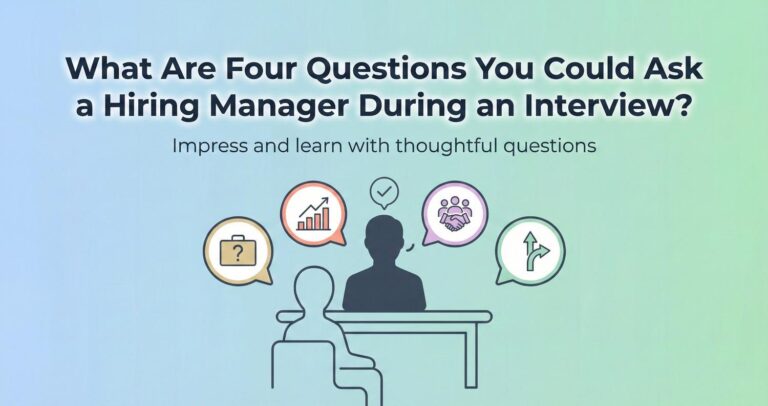
At the end of most job interviews, candidates hear the same closing question: “Do you have any questions for me?”
It sounds like a formality, but it is often one of the most revealing parts of the entire interview. Many candidates miss the opportunity and respond with a quick “No, I think everything is clear,” which can unintentionally weaken their impression.
The questions you ask at this stage are not just about gathering information. They are a final signal of how you think, what you prioritize, and whether you are genuinely evaluating the role or simply trying to get hired.
Why the Final Interview Question Matters More Than It Seems
This moment is often overlooked because candidates assume the interview is already “decided.” In reality, hiring managers use this part of the conversation to assess curiosity, preparation, and long-term thinking.
A strong set of questions can reinforce your strengths, while a weak or absent response can make you appear disengaged. It is one of the few moments where you control the direction of the impression you leave behind.
It also shifts the dynamic slightly – you are no longer just being evaluated; you are evaluating whether the company is the right fit for you.
Questions That Show You Think Beyond the Job Description
1. “What does success look like in this role over the first 6 months?”
This question signals that you are already thinking in terms of outcomes rather than tasks. It moves the conversation away from job duties and toward measurable expectations.
It also helps you understand how performance is evaluated, which is rarely fully explained in job descriptions. Some companies focus heavily on speed, while others prioritize accuracy, collaboration, or ownership.
How they answer often reveals whether expectations are structured or loosely defined, which can significantly affect your experience in the role.
2. “What are the biggest challenges someone in this position typically faces?”
This question demonstrates a realistic understanding of work. Instead of focusing only on positives, you are acknowledging that every role comes with difficulties.
The answer can reveal operational issues, workload pressure, or gaps in team structure that are not visible in the job posting. It also helps you assess whether those challenges are things you are equipped to handle or want to avoid.
In some cases, it opens the door for you to connect your experience directly to those challenges, which can strengthen your position in the interview.
3. “How would you describe the team culture here?”
Culture is often difficult to assess from the outside, yet it has a major impact on job satisfaction and performance. This question helps you understand how people actually work together day to day.
The response can give insight into communication style, management approach, and whether the environment is more collaborative or independent. These factors often matter more long-term than salary or title.
It also signals that you are thinking about fit, not just acceptance.
4. “What are the next steps in the hiring process?”
This is a simple but strategic question. It shows professionalism and keeps the process transparent, especially in interviews where timelines are not clearly explained.
It also helps you manage expectations instead of guessing when you might hear back or what stages are still ahead.
The Mistake Most Candidates Make With Interview Questions
Many candidates treat this part of the interview as an afterthought, asking generic or low-effort questions – or skipping it entirely. This can unintentionally suggest a lack of preparation or interest in the role.
Another common mistake is asking questions that could easily be answered through basic research. Hiring managers notice when candidates have not taken time to understand the company, and it can weaken an otherwise strong interview performance.
The key issue is not asking questions – it is asking questions that fail to add value to the conversation.
How Strong Candidates Approach This Moment Differently
Strong candidates use this stage to deepen the conversation rather than simply fill time. Their questions are intentional, connected to the role, and often based on something mentioned earlier in the interview.
They also adjust their questions based on how the interview has gone. If something was already answered, they do not repeat it. Instead, they build on it with more specific or strategic follow-ups.
This approach creates a more natural and engaging dialogue, which leaves a stronger impression than a scripted list of questions.
Practical Mistakes to Avoid When Asking Questions
One of the most common mistakes is focusing too early on benefits, time off, or compensation. While these are important, raising them too soon can shift attention away from your fit for the role itself.
Another mistake is asking overly broad questions that do not require meaningful insight, such as “Do you like working here?” without context. These tend to produce vague answers and do little to advance the conversation.
The most effective questions are specific, relevant, and connected to how you would actually contribute to the role.
Is Asking Questions Just a Formality?
It may feel like a routine ending to the interview, but it carries more weight than many candidates realize. Employers often interpret your questions as a reflection of how seriously you are considering the position.
A thoughtful question can reinforce your strengths, clarify expectations, and even shift how the interviewer perceives your fit for the role. In some cases, it becomes the part of the interview that is remembered most clearly.
While it is not the only factor in hiring decisions, it is one of the few moments where preparation and communication can directly influence the final impression.
FAQs
Conclusion
The final question in an interview is not a formality – it is part of the evaluation process. It reveals how you think, what you value, and how seriously you are considering the role.
Approaching this moment with preparation and intention allows you to leave a stronger final impression.
In many cases, it is the detail that separates a good candidate from a memorable one.
